

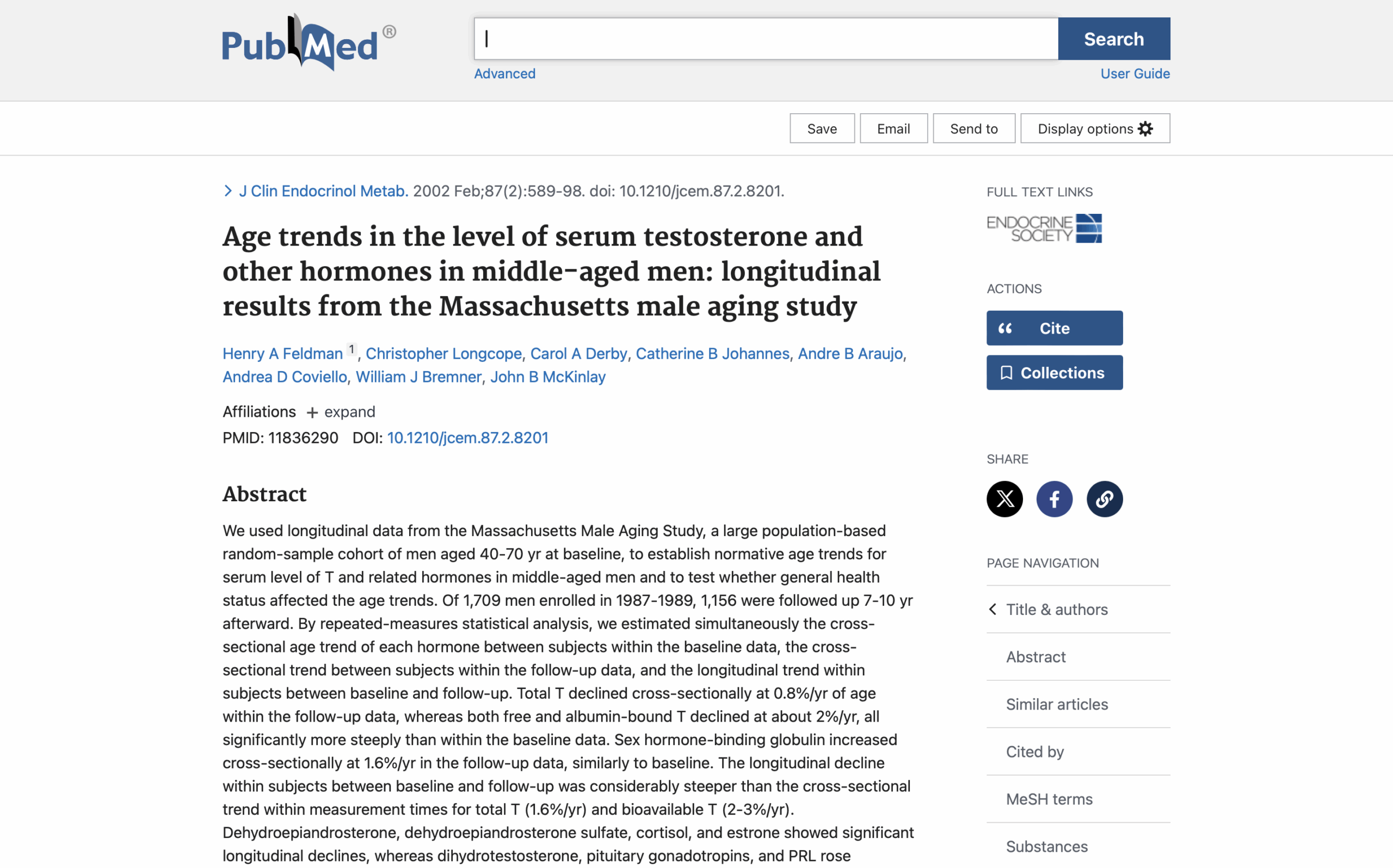
Longitudinal Benchmarks
Two landmark cohorts quantify how circulating testosterone shifts across adulthood:
- The Massachusetts Male Aging Study found a decrease of approximately 1% per year after age 30.
- The Baltimore Longitudinal Study of Aging reported an even steeper decline—about 1.6% per year after age 40.
Lifestyle Factors That Accelerate the Decline
Environmental and behavioral stressors compound chronological aging:
- Reduced muscle stimulus – Sedentary jobs and busy schedules often reduce mechanical loading.
- Poor recovery – Chronic stress and insufficient sleep suppress growth hormone and testosterone.
- Alcohol consumption – Increases aromatization toward estrogen, lowers testosterone, and impairs protein synthesis.
- Suboptimal diet – Inconsistent protein and micronutrient intake hinders tissue repair.
Science-Backed Ways to Support Testosterone
Practical, high-leverage interventions supported by clinical literature:
- Lift heavy, lift smart – Compound lifts (e.g., squats, deadlifts) 2–3x/week support endocrine and neuromuscular health.
- Hit your protein target – Aim for ~1g of protein per pound of target body weight daily.
- Prioritize sleep – Securing at least 7 hours/night preserves nocturnal testosterone and growth hormone output.
- Moderate alcohol – Even 2–3 drinks/week can measurably suppress testosterone recovery.
- Manage stress – Chronically elevated cortisol competes with androgen signaling; integrate walking, meditation, or thermal recovery.