

Info@DoctorTrev.com
ArticlesSupplements4 min read

Meta-Analysis on L-Carnitine Supplementation and Body Composition

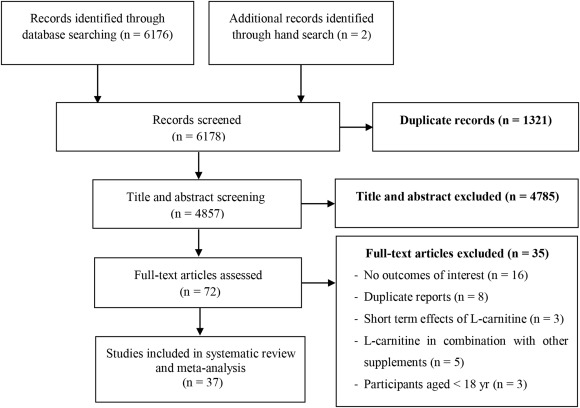
A meta-analysis represents the highest level of evidence as it synthesizes data from multiple randomized controlled trials (RCTs). Talenezhad et al. (2020) evaluated 37 RCTs involving 2,292 participants.

Dr. Trevor Kouritzin

Ph.D. Medicine · M.Sc. Human Nutrition · B.Sc. Chem Eng

Dose-response curve for L-carnitine supplementation on body composition
Fig. — Dose-response curve for L-carnitine supplementation on body composition

Evidence Summary

Across 37 RCTs (n = 2,292), L-carnitine yielded modest reductions in body weight (-1.21 kg) and fat mass (-2.08 kg), with non-linear dose-response peaking around 2,000 mg/day.

A meta-analysis is considered the highest tier of empirical synthesis because it pools data across multiple randomized controlled trials (RCTs). Talenezhad et al. (2020) conducted a systematic review and meta-analysis evaluating L-carnitine supplementation across 37 RCTs involving 2,292 participants.

Key Clinical Findings

Pooled effect sizes across the included clinical trials showed:

  • Body weight reduction: -1.21 kg (95% CI: -1.73, -0.68; p < 0.001).
  • Fat mass reduction: -2.08 kg (95% CI: -3.44, -0.72; p = 0.003).
  • Non-linear dose-response modeling identified 2,000 mg/day as the optimal adult dosing threshold.
  • No statistically significant change was observed for waist circumference, indicating effects may not preferentially target visceral abdominal depots.

Primary References

  1. Talenezhad N et al. (2020). Effects of L-carnitine supplementation on weight loss and body composition: A systematic review and meta-analysis of 37 randomized controlled clinical trials. Clin Nutr ESPEN. https://pubmed.ncbi.nlm.nih.gov/32359762/

Evidence Dispatch

Receive new study breakdowns via email